

In a world of thousands of religions, philosophies, ideologies, and personal belief systems, many people say something comforting: “All paths lead to the same destination.” It sounds peaceful. It sounds tolerant. But is it true?
Let us think carefully.
If two people disagree about a factual claim, they cannot both be correct if their claims contradict each other. If one says the earth is round and another says it is flat, both cannot be right at the same time. Truth, by its very nature, is exclusive. It does not bend to preference. It does not multiply to accommodate feelings. It simply is.
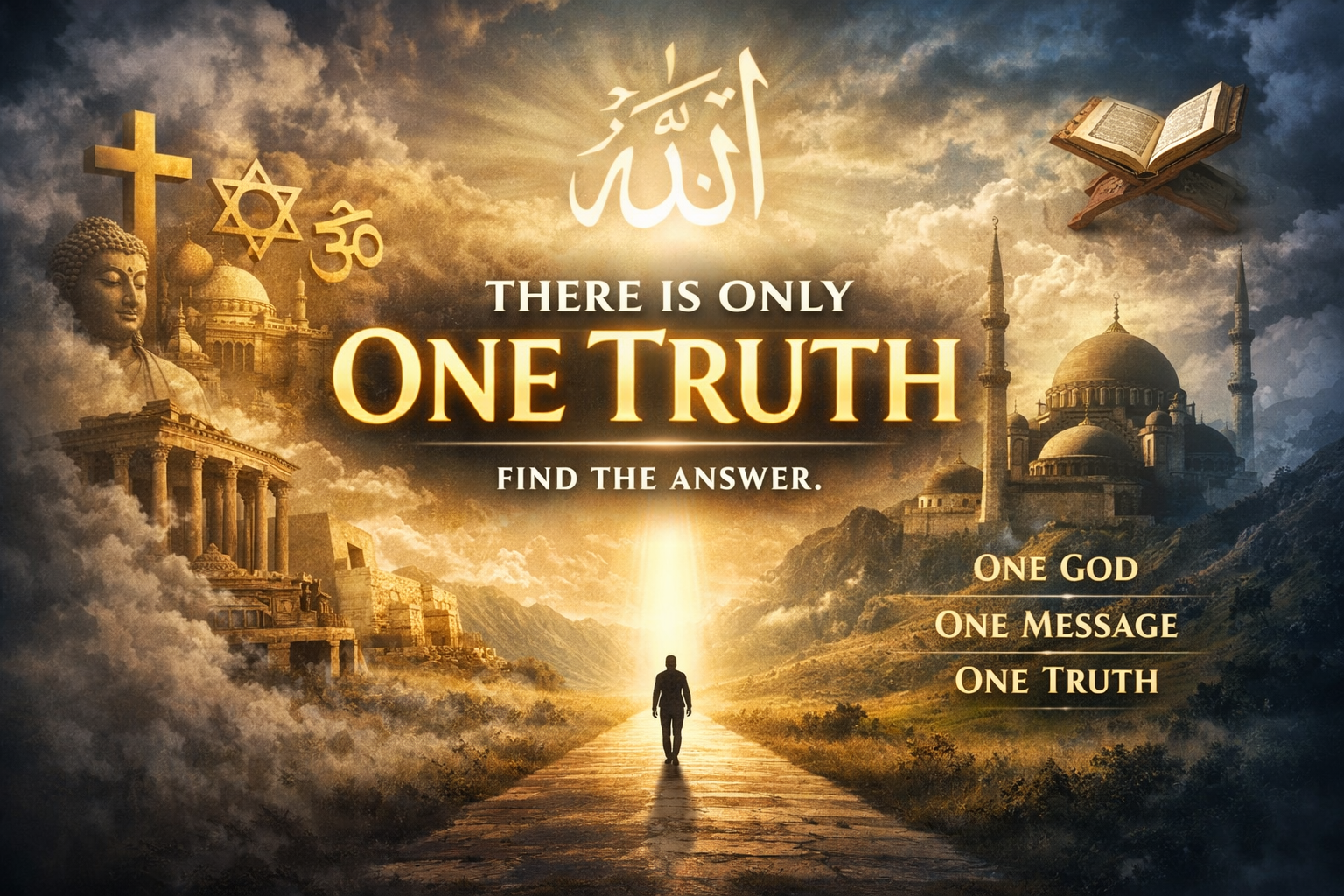
Now apply this to the most important question of all: Who is God, and how should we live?
Some say God is one. Others say God is three. Some say there are many gods. Others say there is no god at all. These claims cannot all be true simultaneously. They contradict each other at the most fundamental level. Either God exists or He does not. Either He is One without partners or He is not. Reality does not allow all opposites to be correct.
So if there is only one reality, there must be only one ultimate truth about God.
Islam begins from this simple, rational foundation: there is one Creator, unique, independent, and unlike His creation. He was not born, and He does not give birth. He is not divided into parts. He does not share His authority. This idea is not complicated. It is not mystical. It is direct, pure monotheism.
But Islam does not ask for blind belief. It invites reflection.
Look at the universe. Everything operates according to precise laws. The sun rises with accuracy. The human body functions with breathtaking complexity. The universe is not chaotic. It is structured. Order points to intention. Design points to a designer.
If there were multiple gods with independent wills, the universe would collapse into conflict. If two ultimate beings had different intentions, whose will would prevail? The harmony we observe suggests unity in authority. One supreme will.
Islam teaches that throughout history, God sent messengers to humanity with the same core message: worship the One God alone and live a life of moral responsibility. From Adam to Noah, from Abraham to Moses, from Jesus to Muhammad, peace be upon them all, the message was consistent in essence: one God, accountability, and righteous living.
Over time, human beings altered and divided. Interpretations multiplied. But the central truth remained simple.
Islam presents itself not as a new religion, but as the restoration of that original truth. It claims that the Qur’an is the final revelation, preserved and unchanged, calling humanity back to pure monotheism. It challenges the reader to reflect, to question, and to examine its message critically.
If truth exists, it must be coherent. It must align with reason. It must explain our origin, our purpose, and our destiny.
Where did we come from? We did not create ourselves. We did not design the laws of nature. Our existence points beyond us.
Why are we here? If life is only random and meaningless, then morality itself becomes subjective. Yet deep inside, we all recognize objective moral truths. Justice matters. Good and evil are not mere preferences. This moral awareness points to a moral lawgiver.
Where are we going? Death is certain. If this life were all there is, then the countless injustices of history would remain unresolved. But if there is accountability beyond death, then existence has meaning, and justice will ultimately prevail.
Islam offers a complete framework: One Creator. A purposeful life. Moral accountability. Resurrection. Justice.
The claim that “all religions are equally true” may feel inclusive, but it dissolves under logical examination. Contradictory claims cannot all be correct. Sincerity does not transform falsehood into truth. Intention does not override reality.
The real question is not: What feels right?
The real question is: What is true?
Islam calls you to examine its message without prejudice. Read the Qur’an. Study the life of the Prophet Muhammad, peace and blessings be upon him. Ask whether the concept of one absolute, indivisible God resonates with your intellect and your innate sense of reality.
If there is only one Creator, then there must be one ultimate truth about Him.
And if there is one ultimate truth, then the most important decision of your life is whether you are willing to seek it honestly.

Leave A Comment